
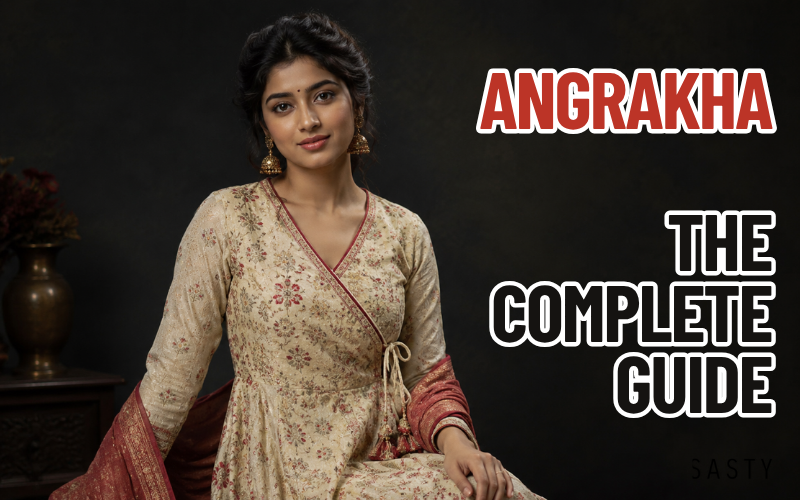
Few traditional garments have managed to survive centuries of changing fashion quite like the Angrakha. Elegant, practical, and deeply rooted in South Asian history, the Angrakha represents a perfect blend of royal heritage and timeless style.
Today, many people recognize Angrakha through modern kurtis, Anarkali suits, fusion wear, and designer collections. However, the story of this distinctive wrap-style garment goes back much further than contemporary fashion trends. The Angrakha was once worn by kings, nobles, musicians, warriors, and later adapted into women’s fashion through centuries of cultural evolution.
What makes the Angrakha particularly fascinating is its ability to remain relevant. Designers continue to reinterpret the silhouette for weddings, festive occasions, casual wear, and luxury fashion collections. Whether it appears as a simple cotton kurti or an elaborate embroidered ensemble, the characteristic overlapping front remains instantly recognizable.
This guide explores everything you need to know about Angrakha, including its history, origins, cultural significance, styling options, and modern interpretations.
What is Angrakha?
An Angrakha is a traditional wrap-style garment characterized by an overlapping front panel that is secured with ties, tassels, loops, or decorative fasteners.
The word “Angrakha” is derived from Sanskrit roots that roughly translate to “body protector” or “garment that covers the body.” Historically, the design served both practical and aesthetic purposes, providing comfort, flexibility, and ease of movement.
Unlike straight-cut kurtas, Angrakhas feature a distinctive crossover front that creates asymmetrical lines and elegant draping. This unique construction gives the garment a sophisticated appearance while allowing greater comfort.
Today, Angrakha-inspired designs can be found in:
- Kurtis
- Anarkali suits
- Long dresses
- Jackets
- Bridal outfits
- Fusion wear
The silhouette has evolved significantly, but the signature overlapping front remains its defining feature.
What is Angrakha Style?
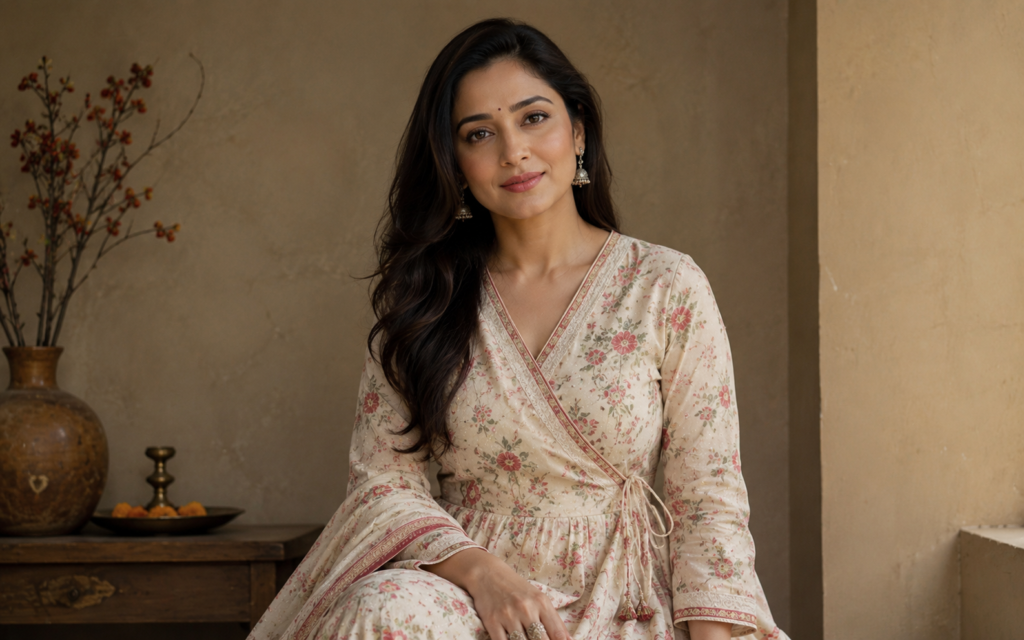
Angrakha style refers to any garment that incorporates the traditional wrap-around construction associated with the original Angrakha.
The most recognizable feature is the overlapping front panel, which creates a diagonal closure rather than a straight central opening.
Modern Angrakha style often includes:
- Side tie-ups
- Tassels
- Fabric strings
- Embroidered borders
- Layered panels
- Asymmetrical hemlines
Fashion designers frequently use Angrakha styling to add visual interest and movement to otherwise simple garments.
One reason Angrakha style remains popular is its flattering effect on different body types. The diagonal lines naturally create a slimming appearance and help define the waist.
This versatility has made Angrakha a favorite choice for contemporary ethnic fashion.
Angrakha is Worn in Which State?
The Angrakha has historical connections to several regions of India, but it is most strongly associated with Rajasthan and Gujarat.
In Rajasthan, Angrakha garments have been worn for centuries by royalty, noble families, musicians, and traditional performers. The style became deeply integrated into the region’s cultural identity and remains visible in folk traditions today.
Gujarat also embraced Angrakha-inspired clothing, particularly among communities that valued practical yet decorative garments.
Over time, the style spread throughout northern and western India, influencing clothing traditions in:
- Rajasthan
- Gujarat
- Uttar Pradesh
- Madhya Pradesh
- Punjab
Today, Angrakha-inspired fashion is worn throughout India, Pakistan, Bangladesh, and by South Asian communities worldwide.
History of the Angrakha
The history of the Angrakha stretches back several centuries and reflects the cultural evolution of the Indian subcontinent.
Historically, Angrakhas were worn primarily by men, particularly in royal courts and aristocratic households. The garment’s wrap-style construction provided comfort while maintaining a dignified appearance suitable for formal settings.
During the Mughal period, clothing styles from Persia and Central Asia influenced local fashion traditions. The Angrakha absorbed many of these influences while retaining regional characteristics.
Over time, artisans introduced:
- Rich embroidery
- Decorative closures
- Handwoven fabrics
- Regional embellishments
As fashion evolved, women gradually adopted Angrakha-inspired silhouettes, especially in Rajasthan and neighboring regions.
Today, most consumers associate Angrakha with women’s ethnic wear, although its origins were considerably broader.
What is an Angrakha Kurta?
An Angrakha kurta is a kurta designed using the traditional Angrakha wrap-style construction.
Instead of a straight front opening, the kurta features overlapping panels that cross over the body and are secured at the side.
The design creates several advantages:
- Elegant draping
- Comfortable fit
- Flattering silhouette
- Visual interest
Modern Angrakha kurtas are available in various lengths, from short casual styles to floor-length festive designs.
Many contemporary brands incorporate Angrakha details into everyday ethnic wear because the silhouette combines traditional craftsmanship with modern practicality.
Angrakha for Women
The Angrakha has become one of the most versatile silhouettes in women’s ethnic fashion.
Designers frequently use Angrakha styling in:
- Kurtis
- Anarkali dresses
- Gowns
- Co-ord sets
- Festive outfits
- Bridal ensembles
The wrap-style design naturally enhances the waistline while creating graceful movement throughout the garment.
Women often choose Angrakha styles because they offer a balance between comfort and sophistication. The design works equally well for casual brunches, office wear, family gatherings, and festive celebrations.
Angrakha for Men
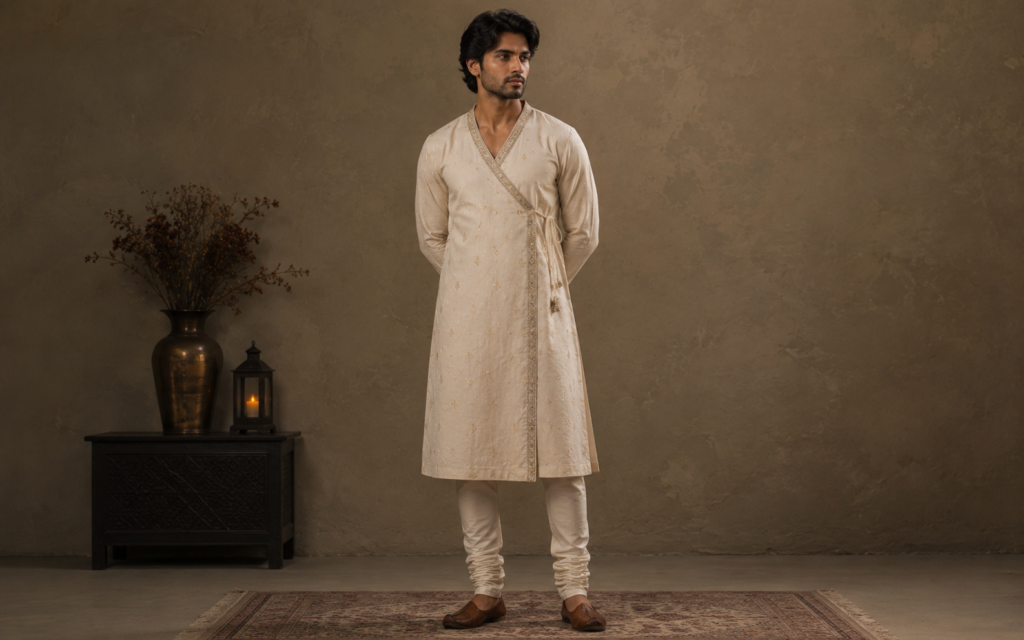
Although modern fashion often associates Angrakha with women’s clothing, its historical roots lie largely in men’s fashion.
Traditional men’s Angrakhas were worn by:
- Rajput rulers
- Court officials
- Classical musicians
- Nobles
- Warriors
These garments were often crafted from luxurious fabrics and adorned with detailed embroidery.
Today, men’s Angrakha kurtas continue to appear at weddings, cultural events, and traditional celebrations.
Different Types of Angrakha
Over time, designers have developed numerous variations of the classic Angrakha.
Traditional Angrakha
Faithful to historical designs with side tie-ups and traditional fabrics.
Angrakha Kurti
A shorter, more casual adaptation suitable for everyday wear.
Angrakha Anarkali
Combines the wrap-style bodice with a flowing Anarkali silhouette.
Layered Angrakha
Features multiple overlapping panels for added volume and movement.
Jacket Style Angrakha
Incorporates structured outer layers and contemporary tailoring.
Angrakha Gown
A modern fusion design popular for weddings and evening events.
Fabrics Commonly Used in Angrakha
Fabric selection significantly influences the appearance of an Angrakha.
Cotton remains one of the most popular choices because it provides comfort and breathability.
Silk creates a luxurious appearance suitable for weddings and festive occasions.
Georgette and chiffon offer fluid movement and contemporary elegance.
Organza is increasingly used in designer collections due to its lightweight structure and sophisticated finish.
The choice of fabric should reflect the occasion, season, and desired level of formality.
How to Style an Angrakha
One reason Angrakha remains fashionable is its versatility.
For casual wear, a simple cotton Angrakha kurti paired with leggings or straight pants creates a comfortable yet polished look.
For festive occasions, embroidered Angrakha suits paired with statement jewelry add sophistication and elegance.
Footwear choices may include:
- Juttis
- Kolhapuris
- Heeled sandals
- Traditional mojris
Because the garment already features visual interest through its wrap-style construction, accessories can often be kept relatively simple.
How to Make Angrakha Style Kurti
Creating an Angrakha-style kurti requires careful pattern drafting because of the overlapping front design.
The process typically involves:
Taking Measurements
Accurate measurements of the bust, waist, hip, shoulder, and desired length are essential.
Drafting the Pattern
Unlike standard kurtis, the front panel must be extended to create the overlap.
Creating the Wrap Section
The crossover portion is designed to sit comfortably across the body while maintaining the desired silhouette.
Adding Tie-Ups
Fabric strings, tassels, or decorative closures are added to secure the garment.
Stitching and Finishing
The final step involves attaching sleeves, hemming edges, and adding decorative details if desired.
Many modern sewing tutorials include visual guides and video demonstrations that simplify the process for beginners.
Why Angrakha Remains Popular Today
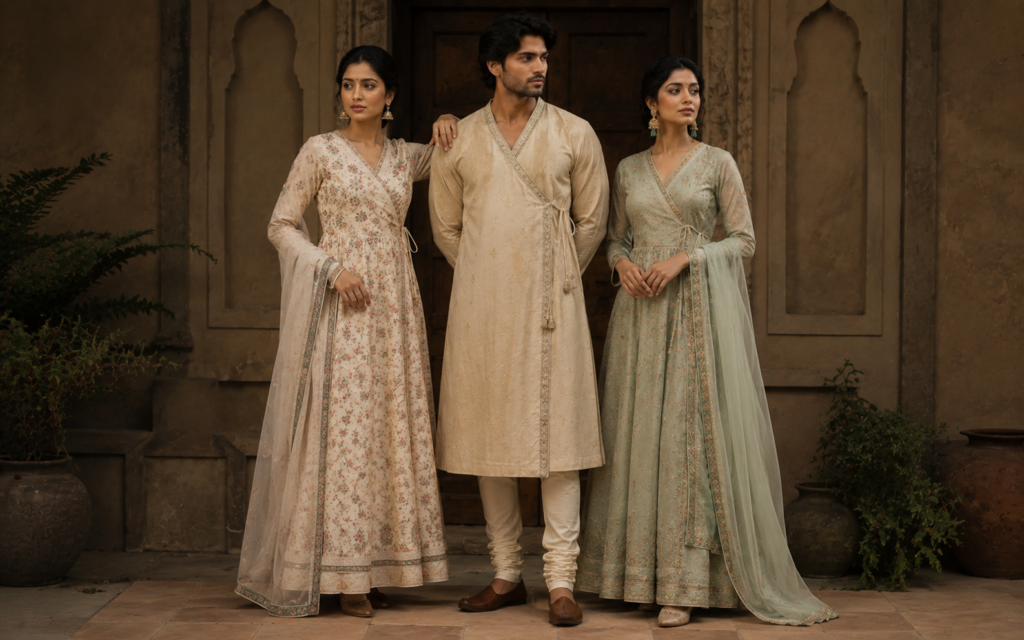
Fashion trends often come and go, but Angrakha has maintained its relevance because it offers something rare: historical authenticity combined with modern wearability.
The silhouette flatters a wide range of body types, adapts easily to changing fashion preferences, and carries a rich cultural heritage that resonates with consumers seeking meaningful clothing choices.
Designers continue to reinvent Angrakha styles for contemporary audiences while preserving the elements that made the garment iconic in the first place.
This balance between tradition and innovation explains why Angrakha continues to appear on runways, wedding collections, and everyday fashion lines alike.
Frequently Asked Questions About Angrakha
Is Angrakha Indian or Pakistani?
The Angrakha originated in the Indian subcontinent long before modern national borders existed. It is part of the shared cultural heritage of South Asia and is appreciated in India, Pakistan, and beyond.
What makes Angrakha different from a regular kurta?
The defining difference is the overlapping wrap-style front. While a regular kurta typically has a straight opening, an Angrakha features a crossover construction secured with ties or fasteners.
Can Angrakha be worn casually?
Yes. Cotton Angrakha kurtis are popular for everyday wear because they combine comfort with distinctive styling.
Is Angrakha suitable for weddings?
Absolutely. Designer Angrakhas, Angrakha Anarkalis, and embroidered Angrakha gowns are commonly worn for weddings and festive celebrations.
Which fabric is best for Angrakha?
The best fabric depends on the occasion. Cotton works well for casual wear, while silk, georgette, and organza are popular for formal events.
Is Angrakha style flattering for all body types?
Many women find Angrakha styles flattering because the diagonal wrap construction naturally creates a balanced silhouette and helps define the waist.
Can Angrakha be worn with jeans?
Yes. Modern fusion fashion frequently pairs shorter Angrakha kurtis with jeans, trousers, and contemporary bottoms.
Conclusion
The Angrakha is much more than a fashion trend. It is a garment that tells the story of centuries of craftsmanship, cultural exchange, and evolving style.
From royal courts in Rajasthan to contemporary designer collections, the Angrakha has continually reinvented itself while preserving its distinctive identity. Its wrap-style construction, rich history, and timeless elegance ensure that it remains one of the most enduring silhouettes in South Asian fashion.
Whether worn as a simple cotton kurti, an embroidered festive outfit, or a luxurious bridal ensemble, the Angrakha continues to prove that truly iconic fashion never goes out of style.
