
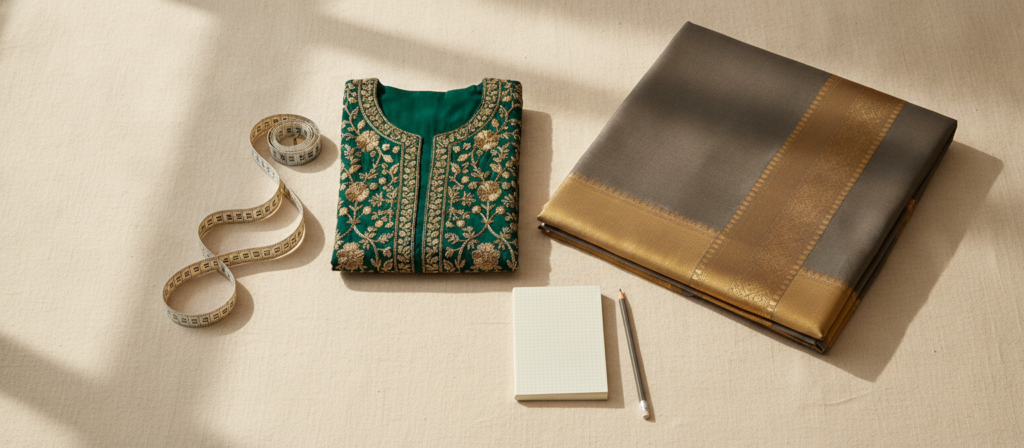
A size chart gives numbers. It does not say how a particular fabric behaves, how a particular cut sits on a particular body shape, or how a size label from one country’s brand compares to another’s. For ethnic wear especially, where garment construction varies so widely between a saree, a lehenga, and a kurti, that gap between the number on a chart and the actual fit is where most online returns start.
Why standard sizing breaks down for ethnic wear
A kurti’s fit depends heavily on side slits, hem length, and how fitted or loose the cut runs, none of which show up in a chest and waist measurement alone. A lehenga’s fit depends on how much flare the skirt carries and where the waistband actually sits. A saree, unlike either, is not sized in the conventional sense at all: fit comes down to the blouse and petticoat worn underneath, not the saree fabric itself. Applying one universal sizing approach across all three garment types is where most of the guesswork comes from.
What actually helps before buying
Comparing sleeve length, shoulder width, and total garment length against a similar piece already owned tends to be more reliable than chest or waist measurements alone for ethnic wear specifically, since fit in these garments is driven more by cut and drape than by circumference. Checking whether a brand’s size chart is based on body measurements or garment measurements matters too, the two produce different numbers for the same size label, and brands are not consistent about which one they publish.
Where virtual try-on changes the picture
Sizing guesswork exists because a product photo shows one model, in one size, and nothing else. Virtual try-on does not measure fit, and the brand’s size chart is still the right tool for choosing a size. What it does answer is the other half of the uncertainty: how a particular colour, print, and silhouette look on the shopper’s own photo rather than on a model. SASTY brings brands from India, Pakistan, and Bangladesh into one place, so a shopper can compare options side by side, preview them with AI virtual try-on, then check the size chart and buy directly on that brand’s own website.
The short version
Chest and waist measurements alone rarely settle fit uncertainty for ethnic wear, since cut, drape, and construction vary too much between garment types and between brands. Comparing garment measurements against something already owned helps. A virtual try-on preview on an actual photo answers the other question, whether the style suits the person wearing it.
