
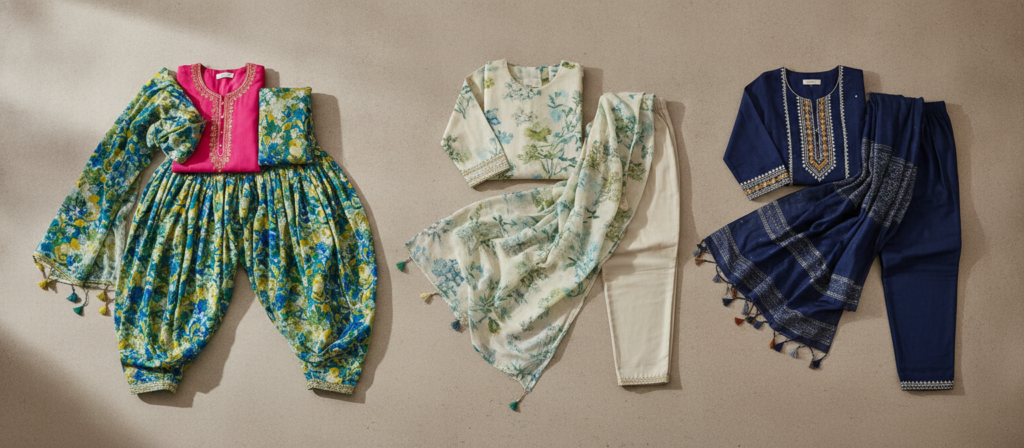
The three-piece suit, a top, bottom, and dupatta or shawl sold or worn as a set, exists across Indian, Pakistani, and Bangladeshi ethnic wear alike. The name stays consistent. What each country actually does with that basic structure does not.
India
Indian three-piece suits typically lean toward the salwar kameez format: a kameez (tunic) paired with salwar or churidar trousers and a dupatta. Regional variation is significant, from Punjab’s Patiala suit, cut with a distinctive pleated, baggy trouser, to South Indian interpretations that favour a straighter, more fitted silhouette.
Pakistan
Pakistani three-piece suits are strongly associated with lawn fabric and seasonal collection releases, particularly around Eid, sold as unstitched or semi-stitched fabric sets rather than finished garments in many cases. The shalwar kameez silhouette tends to run looser through the kameez than its Indian counterpart, with print and embroidery work concentrated on the front panel and dupatta rather than distributed evenly across the set.
Bangladesh
Bangladeshi three-piece sets draw more directly on handloom weaving traditions, frequently incorporating Jamdani-style motifs into the kameez or dupatta even in everyday, non-bridal pieces. The overall silhouette tends toward a straighter cut than either the Indian or Pakistani versions, reflecting Bangladesh’s own tailoring conventions.
Why this matters when shopping across all three
Searching “three piece suit” without specifying a country tends to surface whichever market dominates general search results, which fragments a shopper’s ability to compare a Pakistani lawn set against an Indian Patiala-style suit against a Bangladeshi handloom set on equal footing. SASTY lists three-piece sets from brands in all three countries in one place, so styles, fabrics, and prices can be compared side by side. A virtual try-on option helps preview how a set might look, and when a piece is chosen, the purchase is completed directly on the brand’s own website.
