
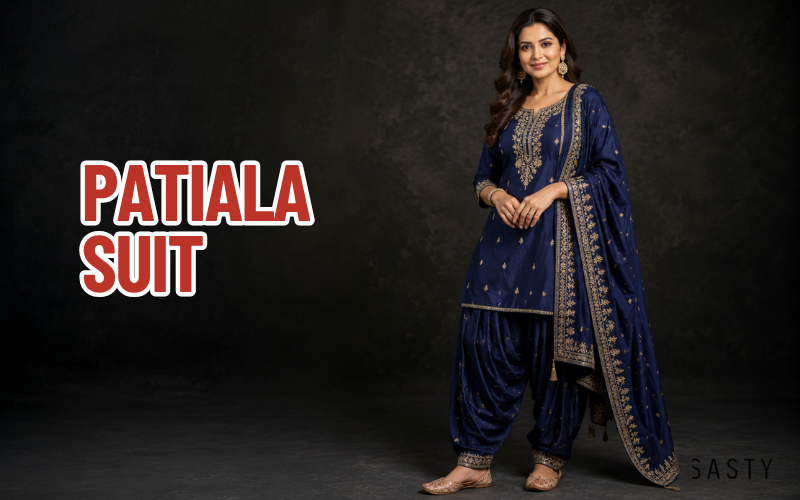
Few traditional outfits have remained as comfortable, practical, and fashionable as the Patiala Suit. While fashion trends come and go every season, the Patiala suit has continued to hold its place in South Asian wardrobes for generations. It is one of those rare outfits that combines cultural heritage with everyday wearability.
Originating from Punjab, the Patiala suit is recognized by its distinctive salwar, which features numerous pleats and a relaxed silhouette. Whether worn at weddings, festivals, family gatherings, college campuses, or casual outings, the outfit manages to feel both traditional and modern at the same time.
Today, Patiala suits are popular not only in India and Pakistan but also among South Asian communities around the world. From heavily embroidered wedding outfits to lightweight cotton suits designed for daily wear, the Patiala suit has evolved significantly while preserving its Punjabi roots.
In this guide, we’ll explore everything about the Patiala suit, including its history, cultural significance, styling tips, fabrics, stitching methods, dupatta draping techniques, and modern fashion trends.
What is a Patiala Suit?
A Patiala suit is a traditional South Asian outfit consisting of three main components:
- Patiala salwar
- Kameez or kurti
- Dupatta
The most recognizable feature is the Patiala salwar itself. Unlike regular salwars, a Patiala salwar uses a significantly larger amount of fabric, creating multiple pleats that fall gracefully from the waist to the ankles.
The result is a loose, comfortable lower garment that allows easy movement while maintaining a stylish appearance.
Traditionally, Patiala suits are paired with shorter kurtis, which help highlight the unique structure of the salwar. However, modern fashion has introduced longer kameez designs, asymmetrical cuts, and fusion styles that offer additional versatility.
The Patiala suit is especially appreciated for its comfort, making it suitable for long events, warm weather, and active lifestyles.
What is a Patiala Salwar?
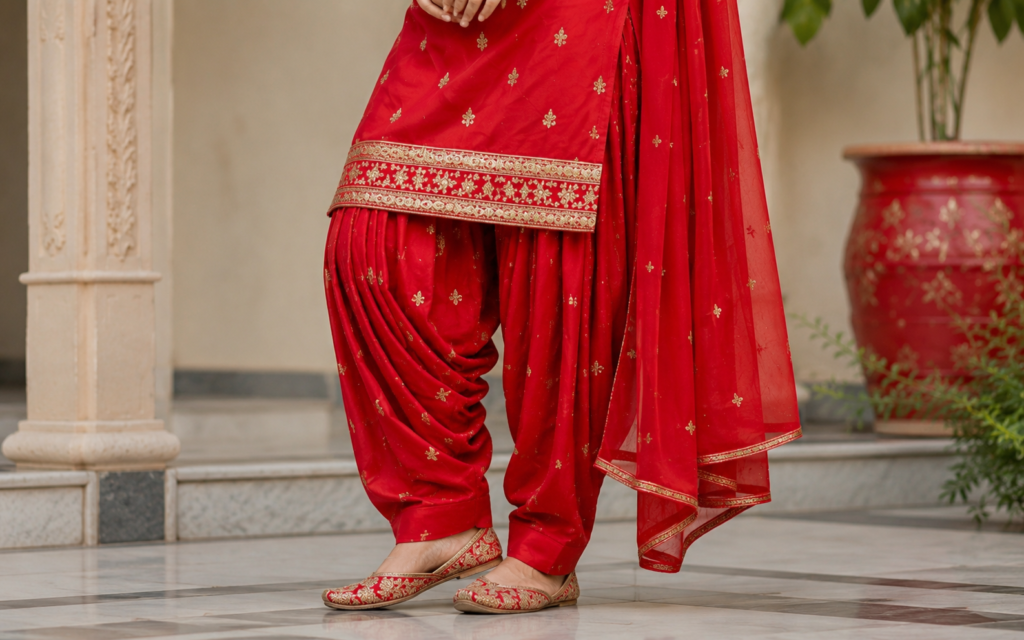
The Patiala salwar is the defining element of the Patiala suit.
Unlike a standard salwar that uses moderate fabric and limited pleating, the Patiala salwar incorporates a large quantity of fabric that is carefully arranged into numerous folds and pleats around the waist.
These pleats create volume and movement while tapering toward the ankles.
Historically, this style was associated with royalty and nobility in Punjab. Over time, it became a popular choice for women due to its comfort and practicality.
The generous fabric allows unrestricted movement, making the Patiala salwar ideal for daily wear, festivals, dancing, and cultural celebrations.
Today, designers experiment with different fabrics, colors, and prints while preserving the characteristic pleated structure that defines the garment.
Patiala Suit Belongs to Which State?
The Patiala suit originates from Punjab, a region known for its rich cultural traditions, vibrant festivals, music, and distinctive clothing styles.
The outfit is specifically associated with the city of Patiala in Indian Punjab. However, its influence extends throughout the broader Punjabi cultural region, including areas that are now part of Pakistan.
Before the partition of India in 1947, Punjab existed as a unified cultural region. Many traditions, including clothing styles, were shared across communities.
As a result, the Patiala suit remains an important cultural garment for Punjabis on both sides of the border.
Today, it is worn by women throughout India, Pakistan, Bangladesh, and the global South Asian diaspora.
History of the Patiala Suit
The history of the Patiala suit is closely connected to the royal courts of Punjab.
Many fashion historians believe that the style gained prominence during the rule of the Maharajas of Patiala. Royal men were known for wearing voluminous garments with distinctive draping and pleating techniques.
Over time, these design influences were adapted into women’s clothing, eventually giving rise to the Patiala salwar.
As trade routes expanded and textile craftsmanship developed, artisans began creating increasingly elaborate versions featuring embroidery, handwork, and luxurious fabrics.
The outfit gradually moved beyond royal circles and became popular among ordinary families throughout Punjab.
What started as a regional style eventually became one of the most recognizable forms of traditional South Asian clothing.
Why is it Called a Patiala Suit?
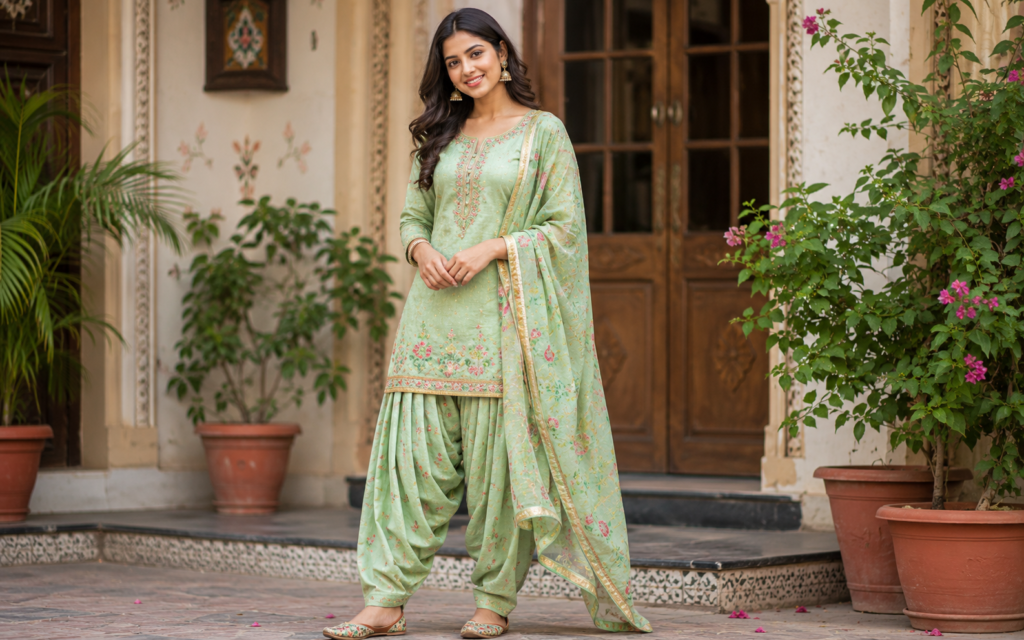
The name comes directly from the city of Patiala in Punjab.
Patiala was historically an important princely state known for its royal court, cultural contributions, and distinctive clothing traditions.
The style became so strongly associated with the region that it eventually adopted the city’s name.
Even today, the term “Patiala suit” immediately evokes images of Punjabi fashion, cultural celebrations, and traditional elegance.
Cultural Importance of Patiala Suit
The Patiala suit is more than just clothing. It is a symbol of Punjabi identity.
For generations, women have worn Patiala suits during:
- Weddings
- Religious celebrations
- Baisakhi
- Lohri
- Family functions
- Cultural festivals
The outfit is often associated with warmth, hospitality, and vibrant Punjabi culture.
Traditional folk dances such as Giddha frequently feature women wearing colorful Patiala suits that enhance movement and visual appeal.
Because of its cultural significance, the Patiala suit continues to play an important role in preserving Punjabi heritage.
Types of Patiala Suits
Modern fashion offers numerous variations of the traditional Patiala suit.
Traditional Patiala Suit
Features a short kameez, heavily pleated salwar, and matching dupatta.
Cotton Patiala Suit
Ideal for everyday wear and hot weather.
Embroidered Patiala Suit
Popular for weddings and festive occasions.
Designer Patiala Suit
Features contemporary cuts, luxury fabrics, and modern embellishments.
Party Wear Patiala Suit
Includes sequins, beadwork, and decorative embroidery.
Printed Patiala Suit
Offers a more casual and youthful appearance.
Silk Patiala Suit
Commonly worn for formal events and celebrations.
Each variation serves a different purpose while maintaining the classic Patiala silhouette.
Fabrics Used in Patiala Suits
Fabric selection significantly influences the appearance and comfort of a Patiala suit.
Cotton remains one of the most popular choices due to its breathability and practicality. It is especially suitable for summer climates.
Silk creates a luxurious look and is often chosen for weddings and festive occasions.
Georgette and chiffon provide fluid movement and a more contemporary aesthetic.
Rayon has gained popularity because it offers comfort while maintaining an elegant drape.
Linen is increasingly used for modern minimalist Patiala suits because of its sophisticated texture and comfort.
The best fabric depends on the occasion, climate, and personal preferences.
How to Wear a Patiala Suit Properly
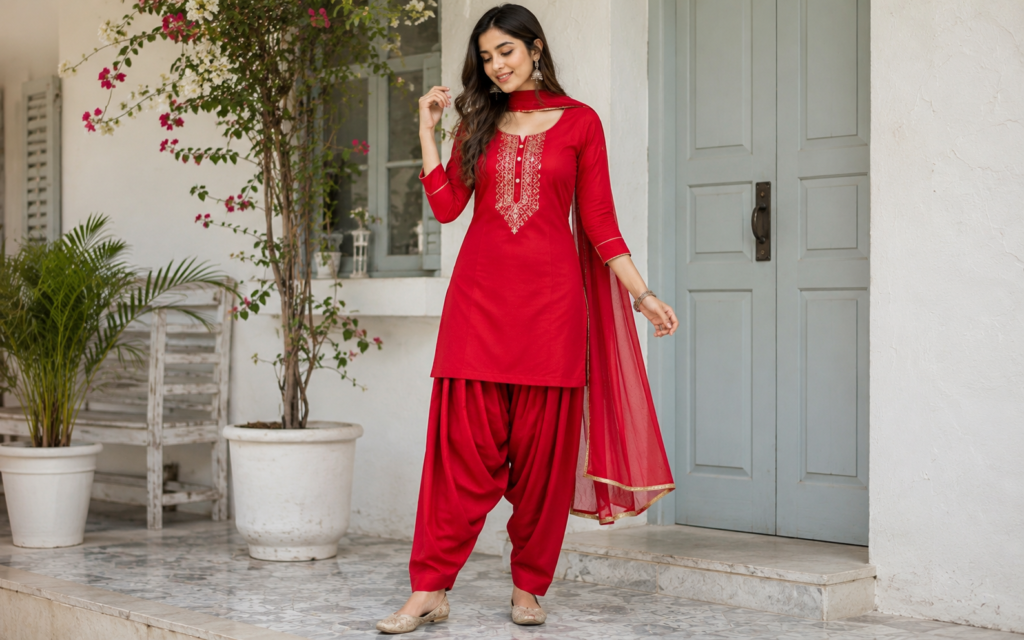
The beauty of a Patiala suit lies in balance and proportion.
The salwar should sit comfortably at the waist while allowing the pleats to fall naturally. The kurti should complement the volume of the salwar rather than overwhelm it.
Footwear choices often include:
- Juttis
- Kolhapuris
- Sandals
- Block heels
Jewelry can range from simple earrings for everyday wear to elaborate Punjabi-inspired pieces for weddings.
The key is maintaining harmony between all elements of the outfit.
How to Wear Dupatta on Patiala Suit
The dupatta can dramatically influence the overall appearance of a Patiala suit.
Traditional Punjabi Style
The dupatta is draped evenly across both shoulders, creating a classic and culturally authentic look.
One Shoulder Style
This modern approach allows the embroidery and salwar to remain the focal point.
Front Open Drape
The dupatta falls loosely over both shoulders and remains open at the front.
Cross-Body Style
A practical option for festivals and events where movement is important.
Wedding Dupatta Style
For formal occasions, the dupatta may be pinned elegantly to create a more structured and sophisticated appearance.
The choice often depends on the event and the amount of embellishment on the dupatta.
How to Stitch Patiala Salwar
Many people prefer custom-tailored Patiala salwars because proper pleating requires skill and precision.
The process begins with accurate measurements of:
- Waist
- Hip
- Length
- Ankle opening
Unlike regular salwars, Patiala salwars require substantially more fabric to create their characteristic pleats.
After cutting the fabric according to the desired dimensions, the tailor carefully arranges numerous pleats around the waistline.
The pleats are then stitched securely before attaching the waistband and ankle cuffs.
A well-stitched Patiala salwar should look full and graceful without appearing bulky.
How to Stitch Patiala Salwar with Pictures
Because Patiala salwars involve complex cutting and pleating techniques, visual references are extremely helpful.
A complete stitching tutorial typically includes:
- Fabric layout diagram
- Cutting measurements
- Pleat formation process
- Waistband attachment
- Final stitching steps
Adding step-by-step images or a video tutorial in this section can significantly improve user engagement and search visibility.
How Much Fabric is Required for a Patiala Salwar?
One of the most common questions involves fabric requirements.
The exact amount depends on height and size, but Patiala salwars generally require significantly more fabric than regular salwars.
For most adult women:
- Approximately 3.5 to 4.5 meters of fabric may be required.
Plus-size variations often require additional fabric to maintain the characteristic volume and pleating.
Because fabric requirements vary, consulting a tailor before purchasing fabric is always recommended.
Modern Patiala Suit Trends
The Patiala suit has evolved considerably over the years.
Today’s designers are experimenting with:
- Digital prints
- Minimalist embroidery
- Pastel colors
- Fusion silhouettes
- Contemporary necklines
- Sustainable fabrics
Many younger women pair Patiala salwars with crop tops, short jackets, and modern accessories to create fusion looks.
These innovations help keep the outfit relevant without sacrificing its traditional identity.
Patiala Suit vs Regular Salwar Suit
While both outfits share similarities, important differences exist.
A regular salwar suit typically uses less fabric and features fewer pleats.
A Patiala suit creates a fuller silhouette through extensive pleating and volume.
Patiala suits often feel more relaxed and comfortable, particularly during long periods of wear.
This combination of comfort and style is one reason they remain so popular.
Where to Buy Patiala Suits Online
Shopping online provides access to a wide variety of Patiala suit styles.
When buying online, consider:
- Fabric details
- Size charts
- Customer reviews
- Return policies
- Close-up images
Platforms that aggregate multiple South Asian fashion brands can make comparison shopping easier and help buyers discover different styles from across the region.
Frequently Asked Questions About Patiala Suit
Why does a Patiala salwar have so many pleats?
The pleats create the characteristic volume and flow that define the Patiala style. They also improve comfort and allow greater freedom of movement compared to more fitted garments.
Is Patiala suit suitable for all body types?
Yes. The relaxed silhouette can be adapted to different body types by selecting the right kurti length, fabric, and salwar volume.
Can I wear a Patiala suit without a dupatta?
Yes. Modern styling often omits the dupatta for a simpler and more practical appearance, especially in casual settings.
What shoes look best with a Patiala suit?
Traditional juttis remain the most popular choice, but sandals, flats, and block heels can also work well depending on the occasion.
Is Patiala suit still in fashion?
Absolutely. While styles evolve, the Patiala suit remains one of the most enduring traditional outfits in South Asian fashion.
Can Patiala suits be worn to weddings?
Yes. Embroidered silk and designer Patiala suits are frequently worn at weddings, receptions, and festive celebrations.
What is the difference between Punjabi suit and Patiala suit?
A Punjabi suit is a broad category that includes several styles, while a Patiala suit specifically refers to the version featuring the distinctive pleated Patiala salwar.
Are Patiala suits comfortable in summer?
Yes. Cotton and lightweight fabric Patiala suits are particularly well-suited for warm climates because they allow airflow and unrestricted movement.
Conclusion
The Patiala suit is a perfect example of how traditional fashion can remain relevant across generations. Rooted in the cultural heritage of Punjab, it combines elegance, comfort, practicality, and timeless appeal in a way few garments can.
From royal origins in Patiala to modern designer collections, the outfit has evolved while preserving its distinctive identity. Whether worn for weddings, festivals, casual outings, or everyday comfort, the Patiala suit continues to be one of the most beloved and versatile traditional outfits in South Asian fashion.
Its enduring popularity proves that true style is not defined by trends—it is defined by garments that remain meaningful, beautiful, and wearable decade after decade.
