
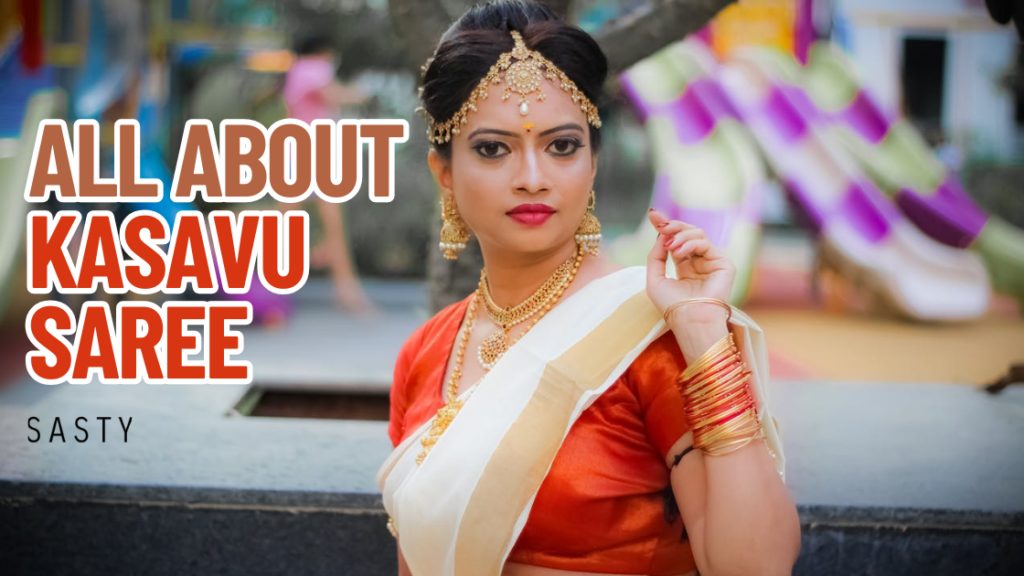
Kasavu Saree: Kerala’s Timeless White & Gold Elegance Explained
There are sarees that follow trends, and then there are sarees that define tradition. The Kasavu saree belongs firmly in the second category.
Recognized instantly by its off-white base and gold border, the Kasavu saree is more than just a garment—it is a symbol of Kerala’s cultural identity. Whether worn during festivals like Onam and Vishu or at weddings and formal gatherings, it carries a quiet elegance that doesn’t rely on heavy embellishment.
What makes it fascinating is its simplicity. No loud colors, no overwhelming embroidery—just fabric, craftsmanship, and balance. And yet, it manages to feel richer than most heavily designed outfits.
In this guide, we’ll explore everything about the Kasavu saree—from its origins and making process to styling, draping, pricing, and modern adaptations.
What is a Kasavu Saree?
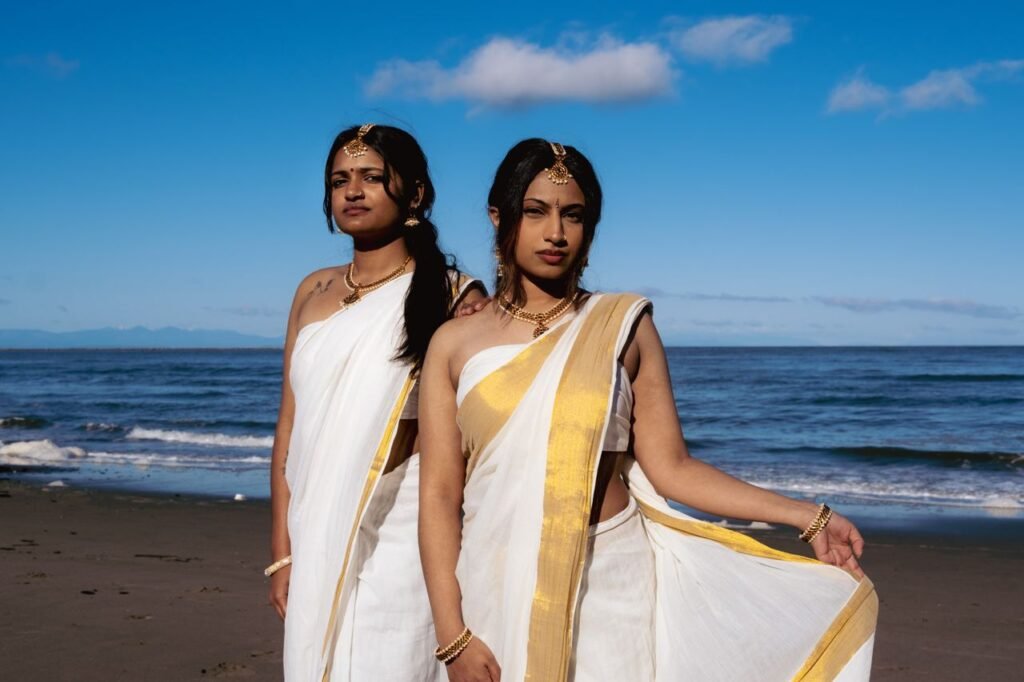
A Kasavu saree is a traditional saree from Kerala, known for its signature combination of a cream or off-white body with a golden border, called “kasavu.”
The word “kasavu” refers specifically to the gold thread used in the border. Traditionally, this gold was real zari made from fine gold or silver threads, giving the saree a luxurious finish without adding complexity to the design.
The saree itself is usually minimal:
- Plain body
- Prominent gold border
- Sometimes subtle motifs or stripes
This minimalism is intentional. It reflects the aesthetic values of Kerala—clean, graceful, and deeply rooted in tradition.
Kasavu Saree Belongs to Which State?
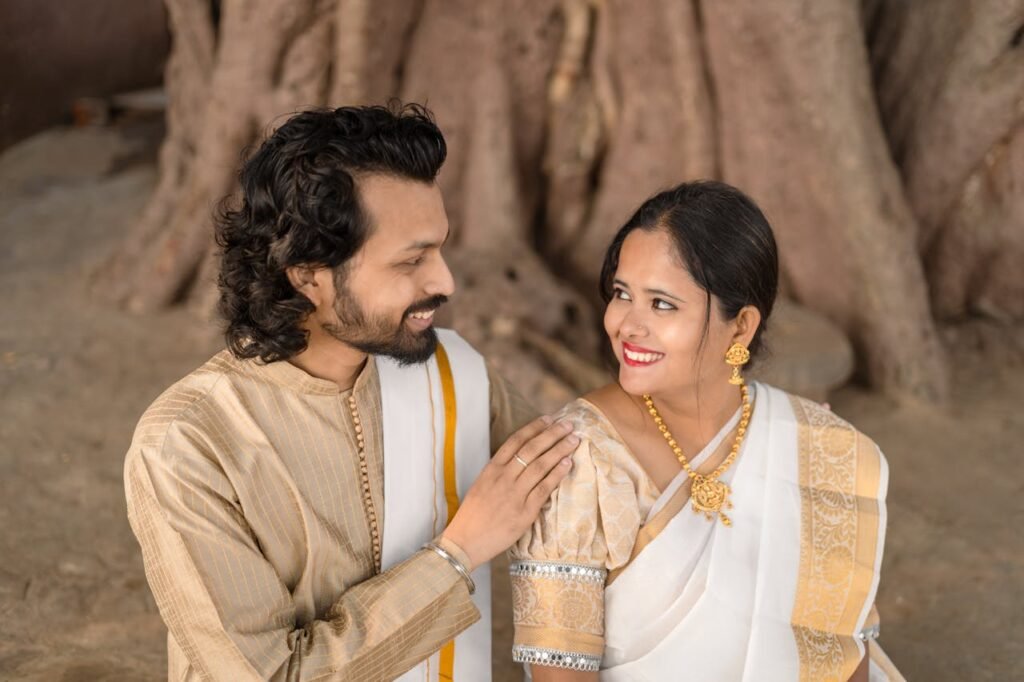
The Kasavu saree is native to Kerala, a southern state of India known for its rich cultural heritage, classical arts, and textile traditions.
In Kerala, this saree is not just fashion—it is part of everyday cultural expression. Women wear it during:
- Onam celebrations
- Vishu festival
- Temple visits
- Weddings and traditional functions
It is also closely associated with Mohiniyattam, a classical dance form of Kerala, where dancers wear a modified version of the Kasavu saree.
Why is Kasavu Saree So Popular?

The popularity of the Kasavu saree comes from a mix of cultural pride, versatility, and timeless design.
Unlike heavily embellished sarees that are limited to specific occasions, Kasavu can be styled for multiple settings. It feels festive, but not overwhelming. Traditional, but not outdated.
There are a few reasons why it continues to remain relevant:
- Its minimal design makes it suitable for all age groups
- The white and gold combination never goes out of style
- It works for both daytime and evening events
- It carries strong cultural and emotional value
In a world where fashion often becomes complicated, the Kasavu saree stands out by being simple—and that simplicity is its strength.
Search Your Favorite Kasavu Saree Here (Type: Kasavu)
How is Kasavu Saree Made?
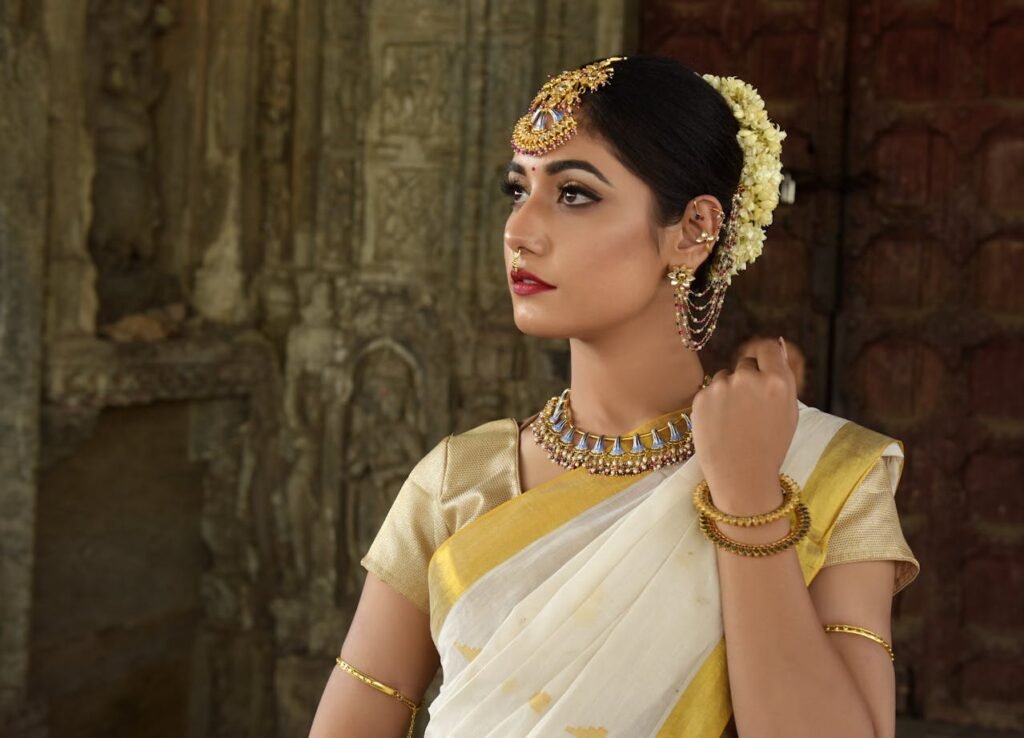
Understanding how a Kasavu saree is made gives you a deeper appreciation of its value.
Traditionally, these sarees are woven using fine cotton yarn, making them breathable and comfortable in Kerala’s humid climate. The weaving process is done on handlooms, especially in regions like Balaramapuram.
The key element is the “kasavu” border:
- Earlier, it was made using real gold or silver zari
- Today, many versions use tested zari for affordability
- The border is woven directly into the saree, not stitched separately
The process requires precision. Even though the design looks simple, achieving that clean finish with a balanced border takes skill.
Handloom Kasavu sarees are especially valued because they preserve this traditional weaving method.
Types of Kasavu Sarees
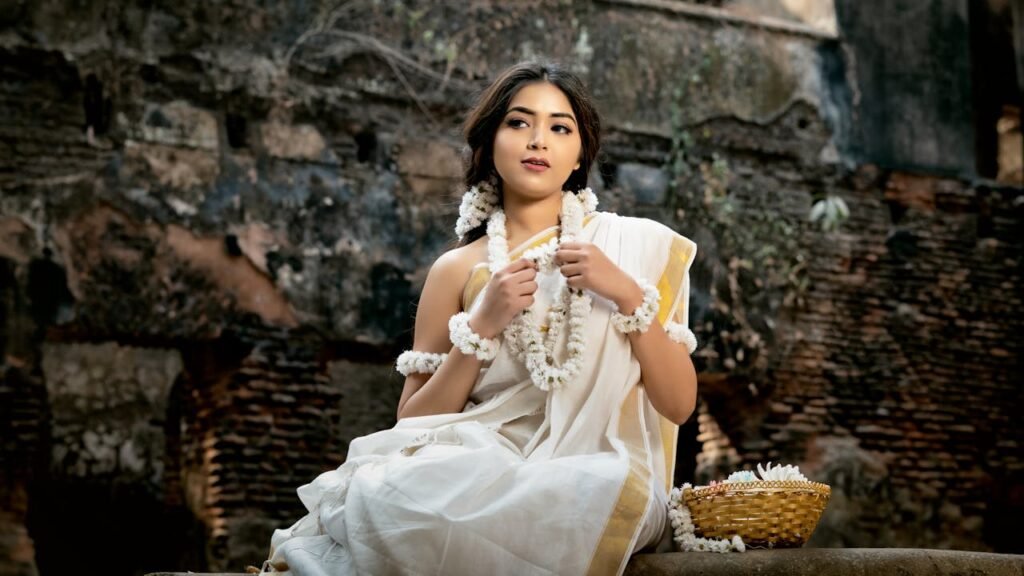
While the classic Kasavu saree is minimal, modern variations have introduced subtle diversity.
Some popular types include:
- Traditional plain Kasavu with a single gold border
- Double border Kasavu sarees
- Kasavu sarees with golden motifs or temple designs
- Set saree (two-piece traditional attire in Kerala)
Modern designers have also experimented by adding:
- Colored borders (red, green, black)
- Contemporary blouse pairings
- Fusion styling
Still, the essence remains the same—white base, gold detail, and elegance.
How to Wear Kasavu Mundu
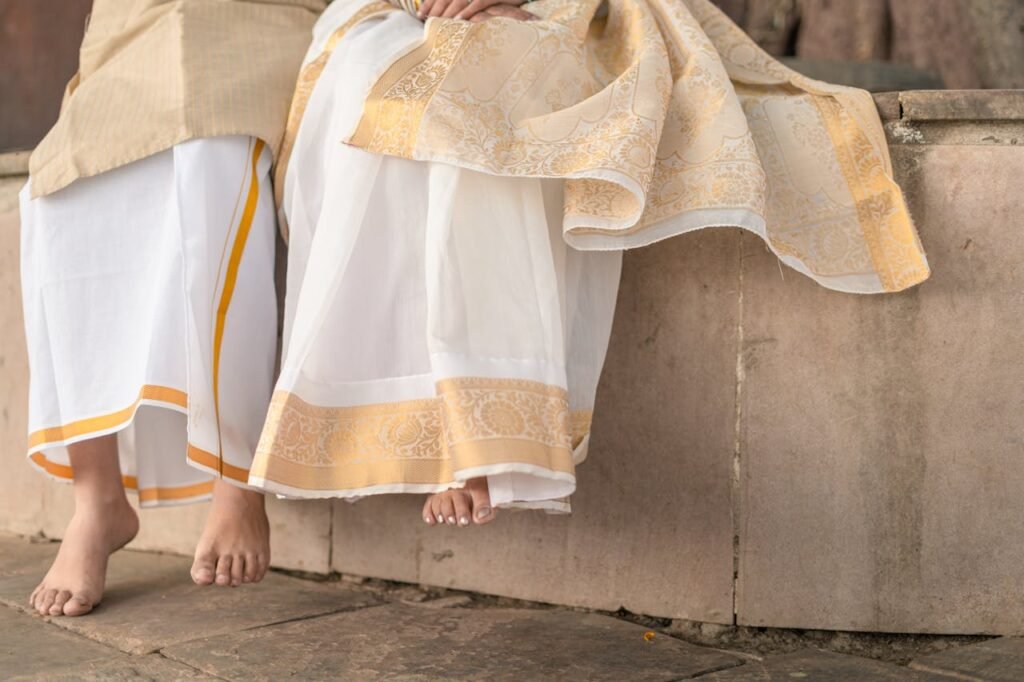
Before the saree became popular, women in Kerala often wore a traditional two-piece outfit called the Kasavu mundu or “set mundu.”
It consists of:
- A lower garment (mundu)
- An upper cloth (neriyathu)
To wear it:
- Wrap the mundu around the waist like a skirt
- Tuck it securely
- Drape the neriyathu over the shoulder like a dupatta
This style is still worn during festivals and traditional ceremonies. It feels lighter and more relaxed compared to a full saree.
How to Drape a Kasavu Saree
Draping a Kasavu saree follows the standard saree style, but the focus is on showcasing the border neatly.
The key steps include:
- Tucking the saree firmly at the waist
- Creating clean, even pleats in the front
- Draping the pallu over the shoulder to highlight the gold border
Because the saree is minimal, neat draping becomes very important. Any imbalance is more noticeable compared to heavily patterned sarees.
Many women prefer a slightly longer pallu to emphasize the kasavu detailing.
Where to Buy Kasavu Saree in Kochi
If you’re looking to buy an authentic Kasavu saree, Kochi is one of the best places in Kerala.
You’ll find a mix of traditional handloom stores and modern boutiques offering both classic and contemporary designs.
Some well-known places include:
- Handloom government stores (like Kerala State Handloom Development Corporation outlets)
- Local markets in Kochi
- Boutique saree stores specializing in Kerala textiles
When buying, it’s important to:
- Check if it’s handloom or powerloom
- Look closely at the zari quality
- Feel the fabric for authenticity
If visiting in person isn’t possible, many trusted sellers now offer Kasavu sarees online.
Kasavu Saree Price Range
The price of a Kasavu saree can vary depending on quality and craftsmanship.
Generally:
- Basic machine-made sarees: affordable range
- Handloom cotton Kasavu: mid-range
- Pure zari or designer versions: premium pricing
Handwoven sarees tend to be more expensive because of the time and skill involved. However, they also last longer and carry higher cultural value.
How to Wash Kasavu Saree
Caring for a Kasavu saree is important to maintain its color and zari.
Because of its delicate nature, it should not be treated like regular clothing.
Here are a few essential care tips:
- Always prefer gentle hand washing or dry cleaning
- Avoid harsh detergents
- Do not wring the fabric
- Dry in shade to prevent discoloration
- Store in a cool, dry place
Proper care ensures the saree remains elegant for years.
Modern Styling of Kasavu Saree
While the traditional look remains popular, modern styling has brought new life to the Kasavu saree.
Women now experiment with:
- Designer blouses (contrast colors, embroidery, sleeveless cuts)
- Statement jewelry
- Belted saree styles
- Fusion looks with contemporary accessories
This flexibility makes the Kasavu saree appealing to younger generations as well.
Frequently Asked Questions (FAQs) About Kasavu Sare
Kasavu saree belongs to which state?
The Kasavu saree originates from Kerala, India, where it holds deep cultural and traditional significance. It is considered the state’s most recognizable form of traditional attire for women and is closely associated with regional festivals, temple rituals, and classical dance forms like Mohiniyattam. In Kerala, wearing a Kasavu saree is not just about fashion—it reflects cultural identity and tradition. Over time, its popularity has spread beyond Kerala, and today it is worn across India and by the global South Asian diaspora, especially during cultural and festive occasions.
Is Kasavu saree suitable for weddings?
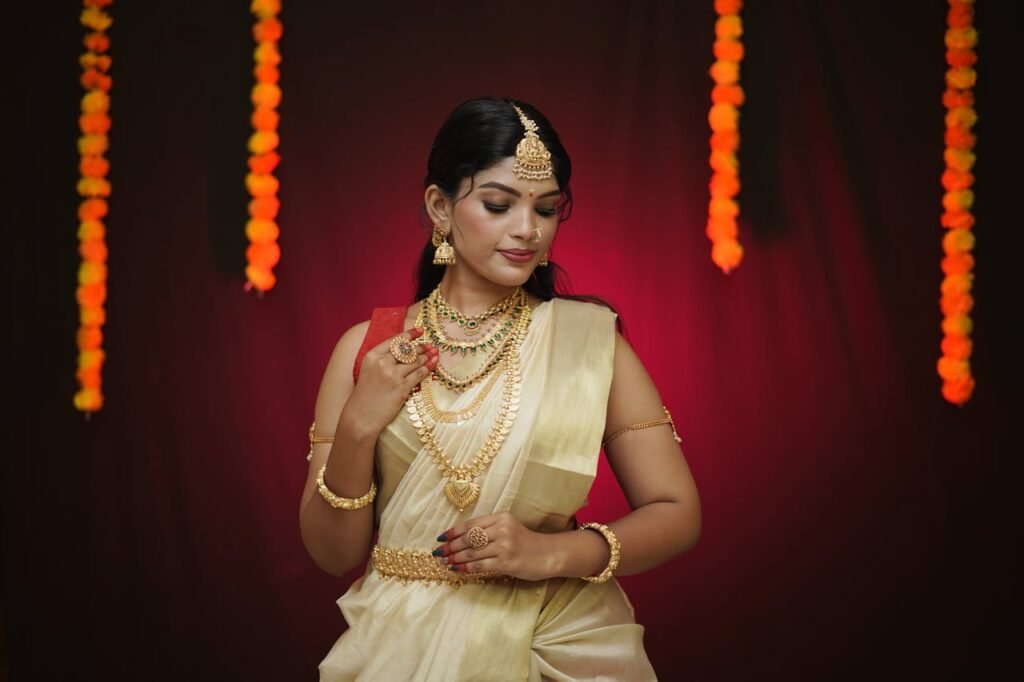
Yes, the Kasavu saree is highly suitable for weddings, particularly in Kerala, where it is often the preferred bridal and ceremonial attire. Brides traditionally wear a more elaborate version of the Kasavu saree, sometimes paired with heavier gold jewelry and a styled blouse to enhance the overall look. Unlike heavily embellished bridal outfits in other regions, the Kasavu bridal look focuses on grace and understated elegance. It is also commonly worn by wedding guests and family members, making it a versatile option for both formal and semi-formal wedding events.
How is Kasavu saree made?
A traditional Kasavu saree is made through a detailed handloom weaving process, primarily using fine cotton yarn. Skilled artisans weave the saree on handlooms, carefully integrating the gold zari border into the fabric rather than attaching it separately. Traditionally, the zari used in the kasavu border was made from real gold or silver threads, though modern versions often use tested zari for affordability. The weaving process requires precision to maintain the clean contrast between the plain body and the border. Regions like Balaramapuram in Kerala are especially known for producing authentic handwoven Kasavu sarees, preserving this craft over generations.
Can Kasavu saree be worn casually?
Yes, one of the strengths of the Kasavu saree is its versatility. While it is deeply rooted in tradition and often worn during festivals and formal occasions, it can also be styled for casual or semi-formal settings. By pairing it with a simple blouse design, minimal jewelry, and light makeup, the saree can easily transition into a daytime or office-appropriate outfit. Modern styling trends, such as pairing Kasavu sarees with printed or contemporary blouses, have further expanded their usability beyond traditional settings, making them relevant for everyday fashion as well.
How to maintain a Kasavu saree?
Maintaining a Kasavu saree properly is essential to preserve its color and zari quality over time. Since the fabric is usually delicate cotton or silk blend with metallic zari, it should be handled with care. Gentle hand washing with mild detergent is recommended for regular cleaning, though dry cleaning is a safer option for long-term care. It is important to avoid wringing the fabric and to dry it in shade to prevent discoloration. When storing, the saree should be kept in a cool, dry place, preferably wrapped in a soft cloth to protect the zari from moisture and tarnishing. With proper care, a Kasavu saree can last for many years and even be passed down as a heirloom piece.
Where can I buy Kasavu saree online?
Kasavu sarees are widely available online through Kerala-based handloom stores, designer boutiques, and larger South Asian fashion platforms. When purchasing online, it is important to check product descriptions carefully, especially details about fabric type (cotton vs silk blend) and zari quality (pure vs tested). Close-up images of the border and weave can help verify authenticity. Platforms like Sasty can also be useful for exploring collections from multiple brands in one place, making it easier to compare styles, prices, and quality before making a decision.
Final Thoughts
The Kasavu saree proves that elegance doesn’t need complexity.
With just two elements—white and gold—it creates a look that feels complete, cultural, and timeless. In a fashion landscape filled with fast trends and changing styles, it remains steady.
And maybe that’s why it continues to matter.
