
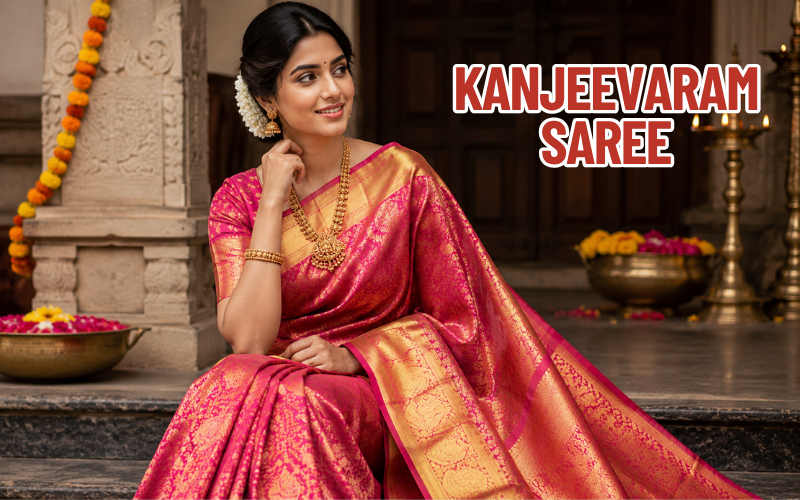
Among India’s countless traditional textiles, very few garments represent luxury, heritage, and craftsmanship as beautifully as the Kanjeevaram Saree. Known for its rich silk texture, bold colors, contrasting borders, and intricate zari work, the Kanjeevaram saree is often considered the queen of South Indian silk sarees.
For generations, Kanjeevaram silk sarees have been an essential part of South Indian weddings, religious ceremonies, festivals, and important celebrations. A bride wearing a traditional Kanjeevaram saree is not simply choosing a beautiful outfit; she is embracing centuries of weaving traditions passed down through artisan families.
The saree gets its name from Kanchipuram, a historic temple town in Tamil Nadu, India, which has become world-famous for producing some of the finest handwoven silk sarees. Each authentic Kanjeevaram saree represents hours of skilled craftsmanship, from preparing silk threads to weaving complex motifs and finishing the luxurious zari borders.
Today, Kanjeevaram sarees continue to hold their traditional importance while adapting to modern fashion preferences. Younger generations are choosing lighter versions, contemporary colors, and fusion blouse designs while maintaining the timeless elegance of the original style.
This complete guide explores everything about Kanjeevaram Sarees, including their history, origin, weaving process, types, designs, wedding styling, authenticity checks, maintenance tips, and frequently asked questions.
What is a Kanjeevaram Saree?
A Kanjeevaram Saree is a traditional handwoven silk saree originating from Kanchipuram in Tamil Nadu, India. It is made using high-quality mulberry silk and is recognized for its durability, luxurious texture, and detailed zari craftsmanship.
Unlike ordinary silk sarees, a traditional Kanjeevaram saree is known for its strong structure and heavier feel. The silk threads used in the saree are carefully processed to create a fabric that can maintain its beauty for decades.
One of the most distinctive features of a Kanjeevaram saree is the contrast between the body, border, and pallu. Traditional designs often feature vibrant combinations such as:
- Purple with gold
- Red with green
- Pink with orange
- Blue with gold
The sarees frequently include motifs inspired by South Indian culture, temples, nature, and mythology.
Because of their exceptional craftsmanship and long-lasting quality, Kanjeevaram sarees are often purchased as heirloom pieces that are preserved and passed from one generation to another.
Kanjeevaram Saree Belongs to Which State?
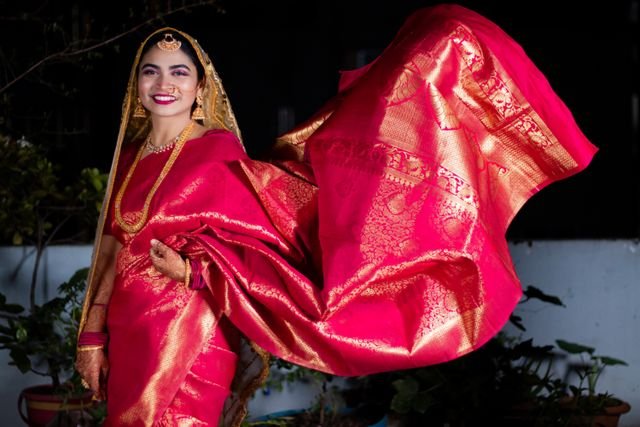
The Kanjeevaram Saree belongs to Tamil Nadu, India.
The saree originates from Kanchipuram, a historic city located near Chennai. Due to its connection with this city, it is also commonly called a Kanchipuram silk saree.
Kanchipuram has been a major center of silk weaving for centuries. The city’s association with temples, royal patronage, and skilled weaving communities helped develop the unique style that made Kanjeevaram sarees famous worldwide.
The traditional weaving community of Kanchipuram has preserved these techniques through generations, making the saree an important part of Tamil cultural identity.
Today, Kanjeevaram sarees are worn throughout India, especially in:
- Tamil Nadu
- Karnataka
- Andhra Pradesh
- Telangana
- Kerala
They are particularly popular for South Indian weddings and religious celebrations.
History of Kanjeevaram Saree
The history of the Kanjeevaram saree is deeply connected with the cultural and artistic traditions of South India.
According to traditional beliefs, Kanchipuram silk weaving developed through communities of skilled silk artisans who migrated to the region and brought advanced weaving techniques with them.
The growth of temple culture in Tamil Nadu also influenced the designs used in Kanjeevaram sarees. Many traditional motifs were inspired by:
- Temple architecture
- Mythological symbols
- Nature
- Religious traditions
During royal periods, silk sarees received significant patronage because they represented wealth, elegance, and social status.
Over time, Kanchipuram became synonymous with exceptional silk weaving. The craftsmanship developed there became so distinctive that the term “Kanjeevaram” itself became a symbol of premium Indian silk.
Why is Kanjeevaram Saree Famous?
The popularity of Kanjeevaram sarees comes from a combination of craftsmanship, cultural importance, and exceptional quality.
A genuine Kanjeevaram saree is not simply manufactured; it is carefully created by artisans who dedicate significant time and skill to each piece.
Exceptional Silk Quality
Traditional Kanjeevaram sarees use high-quality mulberry silk, known for its softness, strength, and natural shine.
The silk gives the saree a rich texture that feels luxurious while also providing durability.
Unique Zari Work
The zari borders and pallus are among the most recognizable features of Kanjeevaram sarees.
Traditional zari work uses silver threads coated with gold, creating the distinctive metallic shine associated with these sarees.
Long-Lasting Value
A well-maintained Kanjeevaram silk saree can remain beautiful for several decades.
Many families preserve wedding Kanjeevaram sarees as valuable heirlooms.
How is a Kanjeevaram Saree Made?
Creating a Kanjeevaram silk saree involves several detailed stages.
Unlike machine-made sarees, traditional handloom Kanjeevarams require significant craftsmanship.
Silk Preparation
The process begins with high-quality silk yarn.
The silk threads are cleaned, prepared, and dyed carefully to achieve the desired colors.
Dyeing Process
Traditional artisans use carefully selected colors to create the rich shades associated with Kanjeevaram sarees.
The dyeing process requires precision because the final color quality greatly influences the appearance of the saree.
Designing the Motifs
Before weaving begins, artisans prepare the design pattern.
Traditional motifs are carefully planned so they appear correctly throughout the saree.
Handloom Weaving
The saree is woven using traditional handlooms.
The body, border, and pallu are often woven separately and then joined using specialized techniques.
This unique process creates the strong structure and durability that Kanjeevaram sarees are known for.
Zari Application
The zari work is carefully incorporated into borders and motifs.
Complex designs require exceptional concentration and experience from the artisan.
Depending on the complexity, creating one handwoven Kanjeevaram saree can take several weeks.
Types of Kanjeevaram Sarees
Pure Kanjeevaram Silk Saree
This is the traditional variety made using pure mulberry silk and high-quality zari.
It is the most preferred choice for bridal wear and important ceremonies.
Bridal Kanjeevaram Saree
Designed specifically for weddings, these sarees usually feature rich colors, heavy borders, and elaborate motifs.
Red, gold, green, and maroon remain popular bridal choices.
Lightweight Kanjeevaram Saree
Modern versions use lighter silk to provide easier movement while maintaining traditional beauty.
These are suitable for women who want elegance with greater comfort.
Designer Kanjeevaram Saree
Contemporary designers experiment with unusual colors, minimalist motifs, and modern blouse combinations.
These styles appeal to younger buyers who want traditional clothing with a modern touch.
Popular Kanjeevaram Saree Designs and Motifs
Kanjeevaram sarees are famous for their symbolic designs.
Temple Border Design
Inspired by South Indian temple architecture, this design represents tradition and spirituality.
Peacock Motif
The peacock is a popular symbol in Indian textiles and represents beauty and grace.
Floral Designs
Flowers and vines are commonly used to create elegant patterns.
Mango Motif
The traditional mango or paisley design is one of the most recognizable Indian textile motifs.
Checks and Stripes
Geometric patterns remain popular for both traditional and modern Kanjeevaram sarees.
Kanjeevaram Saree for Weddings
Kanjeevaram sarees hold a special place in South Indian bridal traditions.
For many brides, choosing a Kanjeevaram saree is an important part of wedding preparation.
Traditional bridal Kanjeevarams are valued because they represent:
- Family heritage
- Cultural tradition
- Luxury craftsmanship
- Timeless beauty
Brides often pair them with:
- Temple jewelry
- Gold necklaces
- Traditional bangles
- Jasmine flowers
- Classic South Indian hairstyles
The combination creates the iconic bridal appearance associated with South Indian weddings.
How to Style a Kanjeevaram Saree
Because Kanjeevaram sarees already have a rich appearance, styling should enhance the saree rather than compete with it.
Blouse Designs
Popular blouse options include:
- Traditional elbow-length sleeves
- Embroidered blouses
- Contrast-colored blouses
- High-neck designs
- Designer back patterns
Jewelry Styling
Traditional gold jewelry works especially well with Kanjeevaram sarees.
Popular choices include:
- Temple jewelry
- Kasu mala
- Jhumkas
- Bangles
Hairstyles
Classic hairstyles include decorated buns with jasmine flowers, while modern styles may include softer open hairstyles.
How to Wash and Care for Kanjeevaram Silk Saree?
A Kanjeevaram silk saree is an investment piece, and proper care is essential to maintain its shine, silk quality, and zari work.
Avoid Frequent Washing
Silk fibers are delicate and do not require regular washing after every use.
Frequent exposure to water and chemicals can weaken silk threads and affect the natural shine of the fabric.
For expensive pure Kanjeevaram sarees, professional dry cleaning is usually recommended.
Store the Saree Properly
Storage plays an important role in preserving silk sarees.
The saree should be folded carefully and wrapped in a soft cotton or muslin cloth. Avoid storing it in plastic covers for long periods because silk needs proper air circulation.
Keeping the saree away from moisture prevents mold formation and fabric damage.
Refold the Saree Periodically
A saree stored in the same fold position for years may develop permanent creases.
Experts recommend refolding silk sarees occasionally and changing the fold lines to protect the fabric.
Protect the Zari Work
The zari is one of the most valuable parts of a Kanjeevaram saree.
Avoid perfumes, harsh chemicals, and direct exposure to moisture because they can affect the metallic threads over time.
Proper handling ensures the zari continues to maintain its traditional shine.
How to Identify a Pure Kanjeevaram Silk Saree?
Because of their popularity, many imitations are available.
Some factors help identify an authentic Kanjeevaram:
- Quality of silk
- Weight of the saree
- Traditional weaving patterns
- Genuine zari details
- Handloom certification
A pure Kanjeevaram generally has a rich texture and noticeable structure compared to synthetic alternatives.
Kanjeevaram Saree Price
The price of a Kanjeevaram saree depends on several factors:
- Silk quality
- Zari quality
- Weaving method
- Design complexity
- Artisan craftsmanship
Handwoven pure silk Kanjeevaram sarees are more expensive because of the time and skill required to create them.
Lightweight and blended versions are available at more affordable prices.
Where to Buy Kanjeevaram Saree Online?
When buying a Kanjeevaram saree online, buyers should carefully check:
- Fabric description
- Silk authenticity
- Seller reputation
- Customer reviews
- Product images
Reliable sellers usually provide detailed information about the saree’s weaving process and materials.
Platforms specializing in South Asian fashion can also help shoppers explore different traditional saree styles from various regions.
Frequently Asked Questions About Kanjeevaram Saree
What is a Kanjeevaram saree?
A Kanjeevaram saree is a traditional handwoven silk saree from Kanchipuram, Tamil Nadu, known for its rich silk quality, zari borders, and intricate traditional motifs.
Kanjeevaram saree belongs to which state?
The Kanjeevaram saree belongs to Tamil Nadu, India, and originates from the historic city of Kanchipuram.
Why are Kanjeevaram sarees expensive?
They are expensive because authentic sarees require high-quality silk, skilled handloom weaving, detailed zari work, and significant artisan effort.
Is Kanjeevaram saree good for weddings?
Yes. Kanjeevaram sarees are among the most popular bridal sarees, especially in South Indian weddings, because of their traditional importance and luxurious appearance.
How can I identify a pure Kanjeevaram silk saree?
A pure Kanjeevaram usually has high-quality silk texture, traditional handwoven details, strong structure, and authentic zari work.
How long does a Kanjeevaram saree last?
With proper care and storage, a genuine Kanjeevaram silk saree can last for decades and often becomes a family heirloom.
Can Kanjeevaram sarees be worn casually?
Yes, lightweight Kanjeevaram sarees can be styled for smaller celebrations and formal gatherings, although traditional heavy versions are usually reserved for special occasions.
Conclusion
The Kanjeevaram Saree represents much more than luxury fashion. It represents centuries of South Indian craftsmanship, cultural identity, and dedication from generations of artisans.
From the silk threads carefully prepared by craftsmen to the intricate zari borders woven by skilled hands, every Kanjeevaram saree carries a story.
Whether chosen as bridal wear, festive clothing, or a treasured heirloom, this iconic saree continues to prove why traditional Indian textiles remain timeless.
